
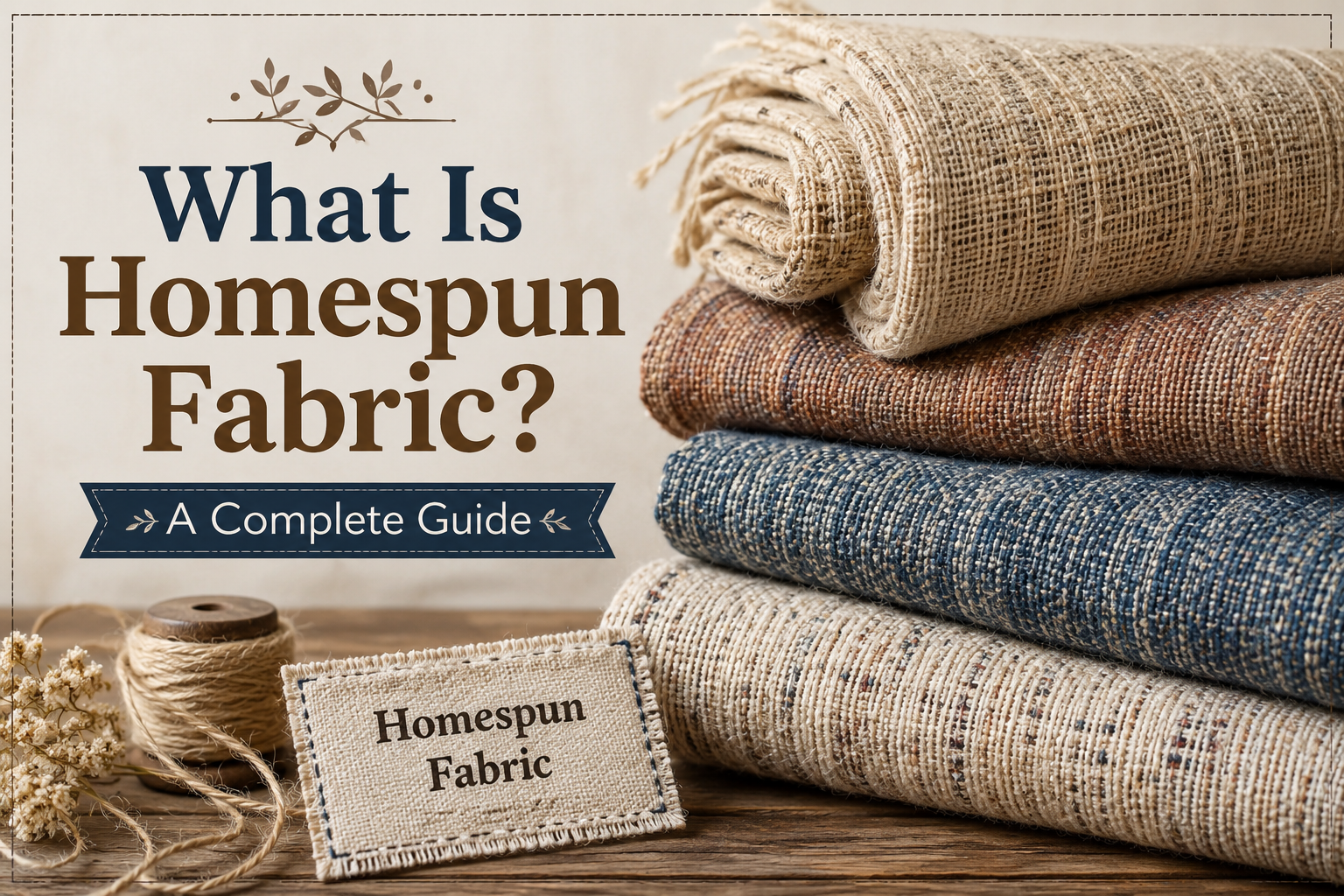
What Is Homespun Fabric? A Complete Guide
Homespun fabric is a traditional textile known for its natural texture, handcrafted appearance, and connection to traditional weaving. Made historically from locally available natural fibers, homespun fabric has been used for clothing, blankets, quilts, household textiles, and decorative projects for generations.
Today, interest in homespun textile, homespun cloth, and other handmade fabrics continues to grow. People are drawn to their rustic appearance, natural materials, traditional craftsmanship, and unique character.
Whether you’re interested in sewing, quilting, home décor, sustainable textiles, or textile history, understanding what makes homespun fabric different can help you choose the right material for your project.
What Is Homespun Fabric?
Homespun fabric traditionally refers to cloth made from yarn that was spun at home and often woven domestically on a handloom. Before industrial textile production became widespread, households commonly produced their own yarn and fabric from natural fibers.
Traditional homespun cloth could be made from cotton, wool, linen, flax, hemp, and other locally available natural fibers.
Unlike highly standardized factory textiles, traditional homespun materials may have slight variations in yarn thickness, weave, and texture. These characteristics give handmade fabric its distinctive appearance.
Today, however, the term “homespun” can also describe commercially produced fabric designed to look rustic or handwoven. Therefore, not every homespun-style fabric is actually handmade.
What Does Homespun Fabric Look Like?
The appearance of homespun fabric depends on the fiber, yarn, weaving technique, dye, and finishing process.
Traditional rustic fabric often has a visible woven texture, slight variations in yarn thickness, a natural or muted appearance, a soft or coarse hand feel, and subtle irregularities.
These characteristics are part of the appeal of traditional textiles. Instead of appearing perfectly uniform, the material can show evidence of the spinning and weaving process.
Modern homespun textile products may reproduce this appearance using machine-made yarn and industrial looms.
A Brief History of Homespun Fabric
The history of homespun fabric is closely connected to household textile production.
Before modern factories, families in many parts of the world produced yarn and cloth themselves. They gathered or grew natural fibers, prepared them, spun them into yarn, and then wove the yarn into usable textiles.
Wool was particularly valuable in colder climates, while flax and linen were important in regions where flax could be grown. Cotton later became a major textile fiber in areas suited to its cultivation.
Traditional homespun weaving was not simply a craft. It was often an essential household activity used to produce clothing, blankets, bedding, bags, and other necessities.
The growth of industrial textile manufacturing eventually made machine-produced fabrics faster and more affordable. However, traditional textiles and handloom weaving survived as important crafts.
Today, artisans, textile historians, weavers, quilters, and craft enthusiasts continue to preserve these techniques.
How Is Homespun Fabric Made?
Traditional homespun fabric involves several stages of textile production.
1. Preparing Natural Fibers
The process begins with a suitable fiber such as cotton, wool, flax, linen, or hemp.
Depending on the material, the fibers may need to be cleaned, separated, carded, combed, or otherwise prepared.
For example, wool may need to be cleaned and aligned before it can be spun.
2. Making Hand-Spun Yarn
Prepared fibers are transformed into hand-spun yarn using a spindle, spinning wheel, or similar tool.
Hand spinning can produce natural variations in yarn thickness and twist. These variations contribute to the characteristic texture of traditional homespun textiles.
3. Preparing the Loom
The yarn is prepared for weaving on a loom or handloom.
The lengthwise threads are known as the warp, while the threads passed across them are called the weft.
Preparing the warp correctly is essential for producing stable and attractive fabric.
4. Traditional Weaving
During traditional weaving, the warp and weft threads are interlaced according to a specific weave structure.
Simple looms can create plain fabric, while more advanced techniques can produce patterns, stripes, and decorative designs.
Handwoven fabric often contains subtle variations that make each piece distinctive.
5. Finishing the Fabric
After weaving, the textile may be washed, dried, brushed, pressed, or treated in another way.
Finishing can influence the fabric’s softness, appearance, shrinkage, and durability.
What Fibers Are Used in Homespun Fabric?
There is no single fiber that defines homespun fabric. Historically, the choice depended on local agriculture, climate, and available resources.
Cotton Homespun Fabric
Cotton homespun fabric is one of the most popular varieties available today.
Cotton is breathable, versatile, and relatively easy to sew. It is commonly used for quilting, shirts, dresses, curtains, cushion covers, bags, and craft projects.
Cotton homespun fabric is especially popular among people who like country, farmhouse, rustic, and traditional styles.
Wool Homespun Fabric
Wool homespun fabric has traditionally been used in colder climates.
Wool can provide warmth and durability, making it suitable for blankets, coats, jackets, throws, and traditional clothing.
Hand-spun wool can have a particularly distinctive texture because of natural variations in the yarn.
Linen and Flax Homespun Fabric
Linen is produced from flax fibers and has been used for textiles for thousands of years.
Linen homespun fabric can have a naturally textured appearance while remaining breathable and durable.
It can be suitable for clothing, household textiles, table linens, and decorative projects.
Hemp Homespun Fabric
Hemp is another natural fiber with a long history of textile use.
Hemp fibers are known for their strength and can be made into durable cloth. Interest in hemp and other sustainable textiles has increased as consumers look for alternatives to some conventional materials.
Types of Homespun Fabric
Different fibers and weaving techniques create different homespun fabric types.
Common varieties include cotton homespun, wool homespun, linen homespun, hemp homespun, handwoven homespun fabric, lightweight homespun cloth, heavyweight homespun textiles, patterned homespun fabric, and rustic homespun fabric.
The best type depends on how you intend to use it. Lightweight cotton may work well for clothing, while heavier wool can be more suitable for blankets and winter textiles.
Homespun Fabric vs. Regular Fabric
One of the most important differences between traditional homespun and ordinary mass-produced fabric is the production process.
| Feature | Homespun Fabric | Mass-Produced Fabric |
|---|---|---|
| Production | Traditionally hand-spun and handwoven | Usually machine-made |
| Texture | Often textured and irregular | Usually uniform |
| Appearance | Rustic and handcrafted | Consistent |
| Yarn | May vary naturally | Generally standardized |
| Production speed | Slower | Faster |
| Character | Individual variations | Highly consistent |
However, modern homespun fabric can be machine-made. Therefore, the term “homespun” does not automatically mean that a fabric was produced entirely by hand.
Homespun Fabric vs. Handwoven Fabric
Homespun fabric vs. handwoven fabric is another distinction worth understanding.
Homespun traditionally describes yarn or cloth produced domestically, particularly yarn that was spun at home.
Handwoven fabric, on the other hand, specifically describes cloth woven by hand, generally using a handloom.
A textile can therefore be handwoven using commercially produced yarn. In that case, it is handwoven but not necessarily homespun in the traditional sense.
Likewise, yarn can be homespun and later woven using another process.
Is Homespun Fabric Handmade?
Traditional homespun textiles were generally handmade, but modern products can be different.
If you are looking for authentic homespun fabric, check whether the seller provides details about the fiber composition, spinning method, weaving method, artisan or manufacturer, country or region of production, type of loom, and finishing process.
A product described as “homespun style” may simply imitate the appearance of traditional fabric.
How to Identify Genuine Homespun Fabric
Learning how to identify homespun fabric can be challenging because machine-made materials can closely imitate handmade textiles.
Look for several characteristics rather than relying on one feature.
Yarn variation: Traditional hand-spun yarn may show differences in thickness and twist.
Irregular weave: A genuine handwoven homespun fabric may contain subtle variations in thread spacing or tension.
Texture: Natural fibers and handmade spinning can create a distinctive tactile surface.
Selvage: The fabric edge, or selvage, can sometimes provide clues about the weaving method.
Maker information: An experienced artisan should be able to explain how the textile was spun and woven.
No single characteristic proves authenticity, but several clues together can provide a better indication.
Uses of Homespun Fabric
The homespun fabric uses extend far beyond traditional clothing.
Homespun Fabric for Clothing
Depending on its weight and fiber, homespun cloth can be used for shirts, dresses, skirts, jackets, vests, scarves, and traditional garments.
Its textured appearance can make simple garments look distinctive.
Homespun Fabric for Quilting
Homespun fabric for quilting is particularly popular.
Cotton homespun can complement traditional quilt designs, farmhouse décor, country styles, and primitive-inspired patterns.
It can be combined with solid colors, prints, and other textured materials.
Homespun Fabric for Sewing
Homespun fabric for sewing can be an excellent option for projects where a handmade or rustic appearance is desired.
Before sewing, consider the fabric weight, fiber content, shrinkage, drape, durability, colorfastness, and weave structure.
Testing a small piece before starting a large project can help avoid surprises.
Homespun Fabric for Home Décor
Homespun textiles can bring warmth and texture into an interior.
Common applications include curtains, table runners, tablecloths, cushion covers, throws, wall hangings, and decorative panels.
These materials work particularly well with farmhouse, cottage, country, rustic, and heritage-inspired interiors.
Blankets and Throws
Heavy wool and other durable natural fiber fabrics can be used to make blankets and throws.
The texture of handwoven materials can add warmth and visual interest.
Craft Projects
Homespun material is also useful for bags, dolls, textile art, ornaments, accessories, and decorative crafts.
Why Is Homespun Fabric Popular?
There are several reasons people continue to choose homespun textiles.
Handmade character: Traditional handmade fabric can contain subtle differences that make every piece feel individual.
Natural texture: Many people prefer the tactile quality of natural materials over perfectly smooth synthetic textiles.
Traditional craftsmanship: Homespun weaving preserves knowledge and techniques passed down through generations.
Rustic appearance: Rustic textiles work naturally with farmhouse, cottage, country, and vintage-inspired styles.
Connection to history: Traditional cloth provides a physical connection to earlier methods of producing everyday textiles.
Benefits of Homespun Fabric
The benefits of homespun fabric depend on the material and manufacturing method, but commonly include unique visual character, natural-looking texture, traditional craftsmanship, a variety of natural fibers, versatility for crafts and sewing, suitability for rustic décor, potential durability, and cultural and historical value.
However, homespun fabric is not automatically better than every commercially manufactured textile. The quality depends on the fiber, construction, finishing, and intended use.
Is Homespun Fabric Sustainable?
The question of sustainable homespun fabric is becoming increasingly relevant.
Traditional production can use natural fibers and small-scale manufacturing, but sustainability depends on more than whether something is handmade.
Important considerations include where the fiber comes from, how it is grown, how much water is used, how it is dyed, how much energy is required, how far it is transported, and how long the finished textile lasts.
A durable fabric that is used for many years may be a better environmental choice than a low-quality textile that quickly needs replacing.
When choosing sustainable textiles, look at the entire supply chain rather than relying only on labels such as “natural” or “homespun.”
How to Care for Homespun Fabric
Proper homespun fabric care depends on the fiber.
Cotton
Cotton is generally easy to maintain, but it can shrink depending on how it was manufactured and finished.
Prewashing cotton before sewing can help reduce later shrinkage.
Wool
Wool requires more careful handling. Heat and excessive agitation can cause some wool fabrics to shrink or felt.
Linen
Linen is durable and breathable but can wrinkle easily.
General Care Tips
Follow the manufacturer’s washing instructions, use gentle methods for delicate textiles, avoid excessive heat, test unfamiliar dyes before washing, keep valuable textiles away from prolonged direct sunlight, and store fragile textiles in a clean, dry environment.
Antique or historically significant textiles may require professional conservation rather than ordinary household washing.
Is Homespun Fabric Good Quality?
Homespun fabric can be excellent quality, but the word “homespun” alone does not guarantee quality.
When evaluating fabric, consider the fiber quality, yarn construction, weave density, fabric weight, finishing, and intended use.
Some handmade textiles are extremely durable, while others are intentionally lightweight, coarse, or loosely woven.
The best fabric is the one that matches the requirements of your project.
Where to Buy Homespun Fabric
If you’re wondering where to buy homespun fabric, there are several options.
Local fabric stores often sell commercially produced homespun-style cotton. Craft markets, textile fairs, and artisan shops may offer handmade fabrics.
For genuine handwoven textiles, independent weavers and traditional textile producers can be particularly valuable sources.
Before purchasing, check the fiber composition, fabric width, fabric weight, handmade or machine-made status, country or region of origin, washing instructions, and minimum order requirements.
If authenticity matters, ask the seller whether the yarn was hand-spun and whether the fabric was handwoven.
How Much Does Homespun Fabric Cost?
The price of homespun fabric varies widely.
Commercial cotton homespun fabric can be relatively affordable, while genuine hand-spun yarn and handwoven textiles can cost considerably more.
Factors affecting price include fiber type, raw material quality, spinning time, weaving complexity, artisan experience, fabric density, dyeing method, rarity, and historical significance.
Handmade textiles generally cost more because they require significantly more time and labor.
Homespun Fabric and Traditional Crafts
Homespun fabric plays an important role in traditional crafts and textile heritage.
In many communities, spinning, dyeing, weaving, and sewing techniques have been passed from one generation to another.
Traditional textiles can provide insight into local agriculture, available natural fibers, clothing traditions, regional design, household economies, trade, and cultural customs.
Preserving these techniques helps protect valuable textile craftsmanship and cultural heritage.
Modern Homespun Fabric
Homespun fabric is not limited to historical or traditional applications.
Today, designers and textile artists use homespun-inspired materials in contemporary fashion, interior design, accessories, quilting, textile art, and handmade products.
Modern designs can combine the rustic texture of traditional cloth with contemporary shapes and styles.
This contrast between old-world texture and modern design is one reason homespun textiles remain relevant.
Homespun Fabric for Sustainable and Slow Fashion
The growing interest in slow fashion has also brought attention to traditional textiles.
Instead of focusing only on fast production and low prices, slow fashion encourages consumers to consider durability, craftsmanship, materials, and the lifespan of clothing.
A carefully made homespun textile can fit this philosophy when it is produced responsibly and used for a long time.
Buying directly from artisans can also help preserve traditional skills and support small-scale textile production.
Frequently Asked Questions About Homespun Fabric
What is homespun fabric?
Homespun fabric is traditionally a textile made using yarn that was spun at home and often woven domestically. It can be made from cotton, wool, linen, flax, hemp, and other natural fibers.
What is homespun fabric made of?
Traditional homespun fabric can be made from many natural fibers, including cotton, wool, linen, flax, and hemp.
Is homespun fabric cotton?
It can be. Cotton homespun is particularly common today, especially for quilting, sewing, clothing, and crafts. Historically, homespun textiles were made from many different fibers.
Is homespun fabric handmade?
Traditional homespun fabric was generally handmade, but modern commercially produced homespun-style fabrics can be machine-made.
How is homespun fabric made?
Traditional homespun fabric is made by preparing natural fibers, spinning them into yarn, preparing the loom, weaving the yarn, and finishing the resulting cloth.
What is the difference between homespun and handwoven fabric?
Homespun traditionally refers to yarn or cloth produced domestically, while handwoven specifically means the fabric was woven by hand. The two terms can overlap but do not always mean the same thing.
Is homespun fabric good for quilting?
Yes. Cotton homespun fabric is widely used for quilting because its texture and rustic appearance work well with traditional and country-style quilt designs.
Can homespun fabric be used for clothing?
Yes. Depending on its weight and fiber, homespun cloth can be used for shirts, dresses, skirts, jackets, scarves, and traditional garments.
How do you care for homespun fabric?
Care depends on the fiber. Cotton is generally easier to wash, while wool and delicate handwoven textiles may require gentler treatment.
Is homespun fabric sustainable?
It can be, particularly when made from responsibly sourced natural fibers and designed for long-term use. However, sustainability depends on the entire production process.
Where can I buy authentic homespun fabric?
Authentic homespun textiles can sometimes be found through independent weavers, artisan markets, traditional textile producers, craft fairs, and specialist fabric sellers.
Final Thoughts
Homespun fabric is much more than a rustic-looking textile. It represents a long history of spinning, weaving, craftsmanship, and practical household production.
From cotton homespun fabric used in quilting to wool homespun fabric used for warm blankets, traditional textiles continue to offer versatility and character. Modern homespun-inspired materials also make it possible to bring that distinctive texture into contemporary sewing, fashion, crafts, and home décor.
If you’re shopping for homespun fabric, don’t focus only on the name. Consider the fiber, weave, texture, production method, durability, and care requirements.
And if you’re interested in authentic handmade textiles, learning about traditional weaving, hand-spun yarn, and handwoven fabric can help you appreciate the skill behind every piece.
In a world filled with mass-produced materials, homespun fabric remains appealing because its texture and imperfections can tell a story. Whether you’re a quilter, designer, sewist, collector, or simply someone who appreciates natural textiles, homespun cloth offers a connection to craftsmanship that continues to endure.
For more informative content and the latest updates, visit The Global Mag.